

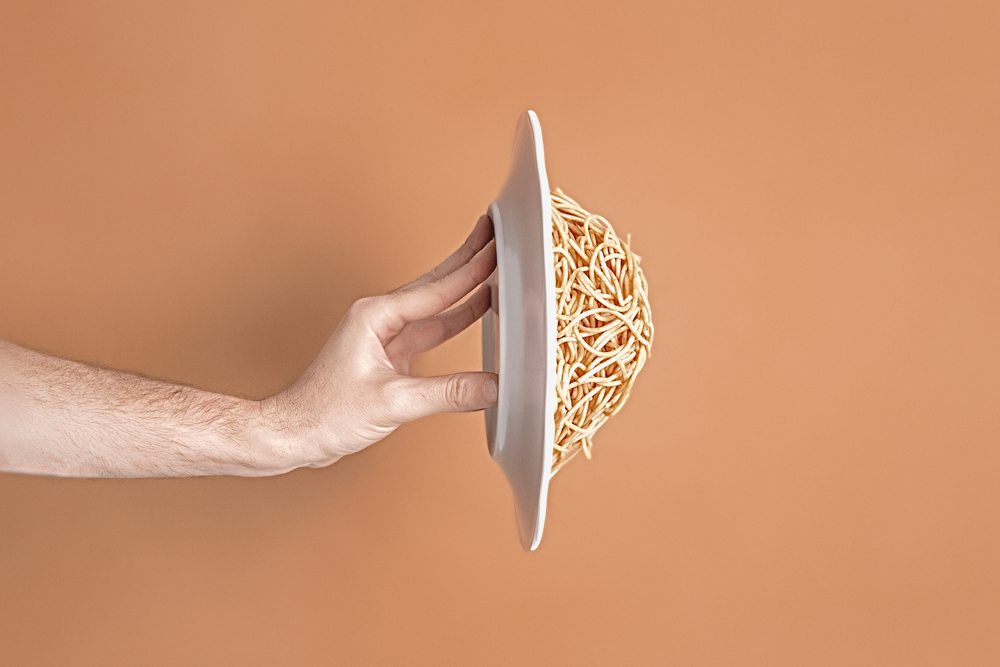
I don’t know if spaghetti is done when it sticks to the wall. I do know that you’ve now added one more step to your cooking process–cleaning that wall. If you’re like me, you don’t need to add any more to your cooking, or cleaning, regimen. So, there must be a better way to tell when your spaghetti or any pasta, for that matter, is done. And there is–you taste it.
Tasting pasta for doneness is the only foolproof way to know if the pasta is ready. Because there are so many factors that determine whether or not pasta is done, throwing it against the wall couldn’t possibly tell you anything about the pasta except, perhaps, whether or not it is sticky enough to stick to the wall.
When you’re hungry and ready to eat, who cares if the pasta sticks to the wall? What you care about is if the pasta is ready to plate and eat, and this is determined by the level of doneness required to finish the dish. If the pasta is going from the pot directly onto the plate, then al dente is the level of doneness that you want to achieve. Al dente means “to the tooth,” so al dente pasta should have a little bite to it when you taste it for doneness.
Pasta that will be finished in a sauce can be a little more toothsome than al dente when it is removed from the pot of boiling water. The pasta will finish cooking–getting to the al dente state–in the sauce. Don’t forget to reserve some of the pasta water in case the slightly underdone pasta absorbs too much of the liquid in the sauce. If the sauced pasta becomes to thick, just add some of the reserved, starchy, salty pasta water to the dish to bring it to the desired consistency.
For soups and stews, you really could use uncooked pasta in the recipe. Keep in mind that the uncooked pasta will absorb quite a bit of liquid in the cooking process. So, plan to start with enough liquid to to cook the pasta in the soup, or plan to add more liquid throughout the cooking process to maintain the desired liquidity and level of seasoning. The end point for pasta in soups and stews is still al dente. However, the longer the pasta remains in the soupy liquid, the less toothsome it will be. So, consider pouring the prepared soup over cooked, al dente pasta in each serving bowl.
Finally, stop throwing your pasta at the wall. Taste it to determine how done it is. And use good cooking sense to get the pasta to the table when it is still al dente.